Mr Luck Registration and Verification UK
 Available in GB
Mr Luck’s current Terms define the United Kingdom as the permitted jurisdiction for play and require account holders to be at least 18. For remote gambling, UK Gambling Commission rules require identity verification before a customer is allowed to gamble, while age must be verified before depositing, accessing free-to-play gambling games or gambling.
Registration is therefore not just a username-and-password step. Account information must be genuine, checks can occur before play, and payment ownership or source-of-funds checks can occur later. Exact document requests and verification times can depend on the account and the purpose of the check.
Eligibility and account opening
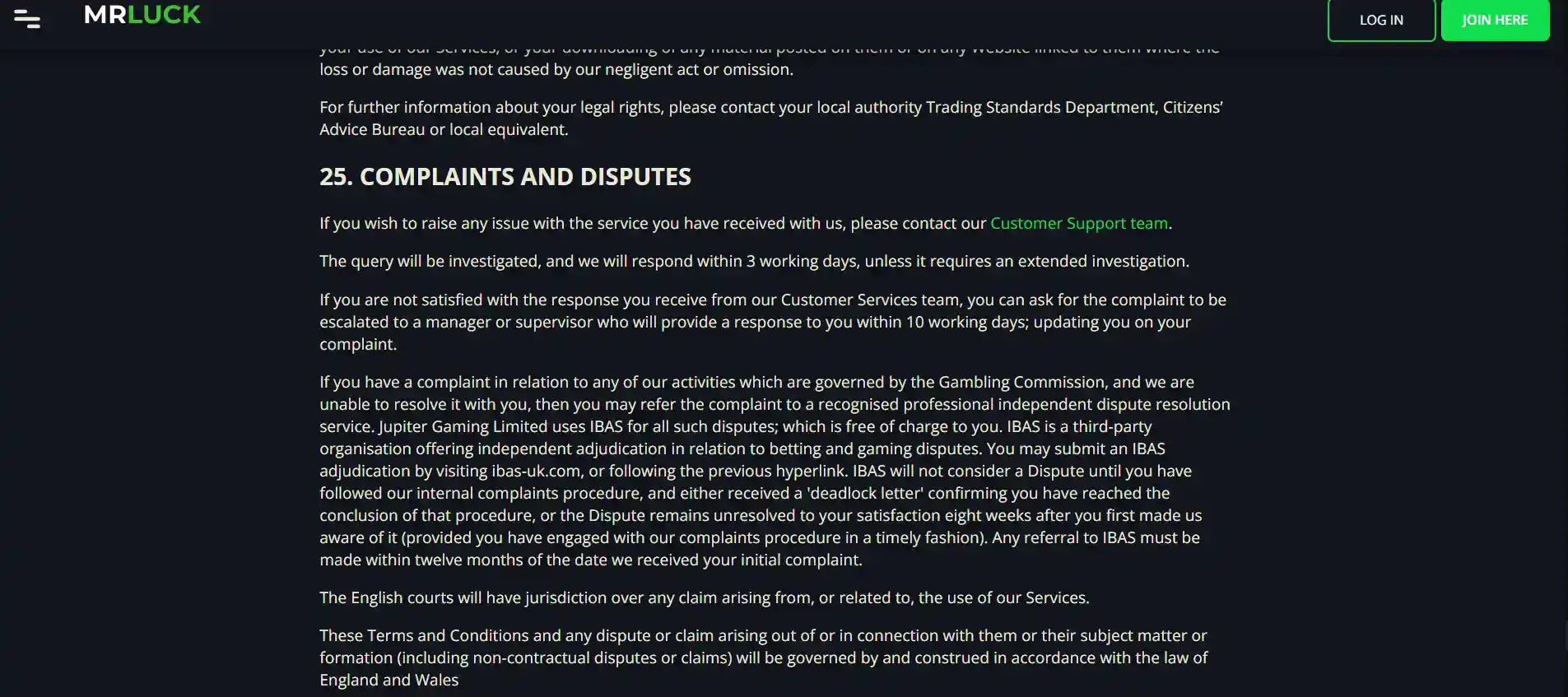
Mr Luck’s Terms state that wagers and play are accepted from people located in the United Kingdom, which the Terms define as the permitted jurisdiction. They also state that an applicant must be at least 18, must have legal capacity to enter the agreement, must open the account for personal use and must provide correct registration information. Those points establish the useful baseline without needing to guess the exact sequence of form fields shown on a particular device.
The registration form can change over time, so follow the current fields shown in the official flow. Mr Luck’s Terms refer to identifying details such as name, date of birth, postal address and email address, together with other information used to authenticate identity. Enter those details as they genuinely apply to you and keep them consistent with the payment method and any later verification evidence.
Account ownership is personal. The Terms say the account is for the customer’s own use and cannot be transferred to a third party. In practice, that means sharing an account or trying to operate through somebody else’s identity creates obvious verification and payment problems. It also makes later account recovery harder because support has to establish that the person asking for access is the legitimate account holder.
Useful preparation: before starting, use your own contact details and make sure the name and address you enter can be matched to the records and payment method you intend to use. Do not create a second identity or alter details merely to get past a check.
The minimum deposit stated in Mr Luck’s current Terms is £10, but depositing is a separate stage from opening the account. A new user should first establish that the account details are correct and that required age and identity checks have been completed. The Mr Luck payment methods guide covers the current cashier options and Great Britain credit-card rules in more detail.
Identity verification before gambling
UKGC rules for remote operators require identity verification before a customer is permitted to gamble. The Commission’s current licence condition identifies name, address and date of birth as the core identity information that must be verified. A separate social-responsibility rule requires age verification before a customer can deposit, access free-to-play gambling games or gamble. The result is that verification sits at the front of the customer journey, not merely at the point of a large withdrawal.
Mr Luck’s own Terms allow verification checks and require registration information to be accurate. Automated data checks can resolve some customers quickly, while another account may need additional information. Exact document requests and completion times can vary, so follow the specific request shown in the official account flow rather than assuming one universal checklist or deadline.
A generic KYC checklist can be misleading because operators can use different data sources and request different evidence depending on what needs to be verified. Follow the specific request shown in the official account flow and provide the evidence relevant to that check instead of uploading unrelated documents.
| Stage | What is established | Do not assume |
|---|---|---|
| Registration | Real personal account information is required | A permanent sequence of form fields |
| Before gambling | Identity must be verified under UKGC rules | A universal manual-document request |
| Before deposit/free play | Age must be verified | A guaranteed instant result |
| Later account use | Additional checks can still be requested | That initial verification ends all future checks |
If a later request appears, read exactly what the operator is asking you to establish. A request about identity, payment ownership or affordability/source of funds may have a different purpose and require different evidence. Uploading unrelated files simply because they appear on a generic KYC checklist can slow the process rather than help it.
Payment ownership and source-of-funds checks
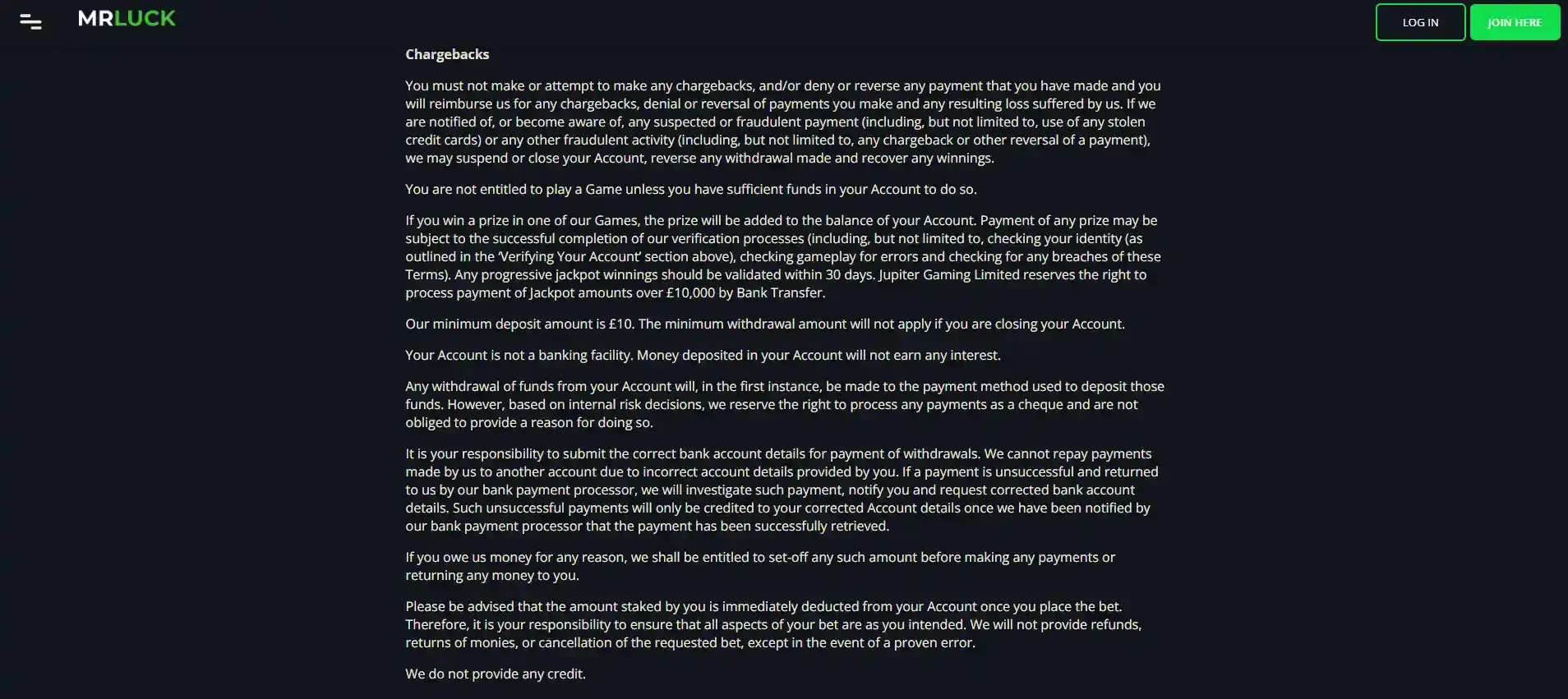
Mr Luck’s Terms require payment methods to belong to the account holder and allow the operator to verify payment ownership and source of funds. That is why account details and payment details should be treated as one continuous identity trail. A card, bank account or wallet in another person’s name can create a mismatch even if the deposit itself is technically processed.
Source-of-funds checks are also different from the initial identity check. Identity verification asks who the customer is. Payment ownership asks whether the payment instrument belongs to that customer. A source-of-funds check asks where the money being used came from. These can overlap, but they answer different questions, and completing one does not guarantee that another will never be required.
For users, the most useful preparation is consistency. Use an account in your own name, fund it through payment methods you control, keep transaction records that are actually connected to your activity, and respond through the official account or support route if a check is requested. Do not send sensitive documents to an address or upload portal found through an unofficial search result.
This is also why a withdrawal can involve checks even when the account was previously usable. Mr Luck’s Terms say withdrawals are initially directed to the method used for deposits, subject to the operator’s verification and controls. The Mr Luck withdrawal guide explains that return-path principle separately without inventing processing times, fees or periodic limits.
The UKGC also states that operators should not hold back information requests that could reasonably have been made earlier simply to raise them at withdrawal. That does not mean every withdrawal must be automatic. It means verification should be handled fairly in the context of what the operator already knew or could reasonably have checked.
Financial limits during registration
Remote gambling customers must be prompted to consider a financial limit as part of registration or before their first deposit. That makes the limit prompt part of the account-opening journey rather than an optional feature hidden only in a safer-gambling menu. A useful response is to choose a figure based on what you can afford to spend, not on the size of a promotion or the amount you hope to win.
The UKGC’s updated technical rules on gross deposit limits are scheduled to come into force on 30 September 2026. From that date, operators must offer gross deposit limits that meet the updated definition and give them at least equal prominence to other financial limits. Until that date, the new technical requirement is not yet in force.
Under the new definition, a gross deposit limit restricts how much can be deposited during the defined period without subtracting withdrawals from that amount. The system must prevent further deposits once the limit is reached until the period restarts or the customer increases the limit subject to the applicable cooling-off requirement. Other financial-limit types can still be offered in addition, but the gross deposit limit becomes the required baseline from 30 September 2026.
For a new Mr Luck account, the practical point is not to search for the largest permitted setting. Use the prompt to establish a boundary before gambling begins, and review it against your own budget. If the interface or terminology changes after 30 September, rely on the current account controls rather than older guidance.
Routine verification versus additional checks
Passing the initial identity check does not mean every later account check is complete forever. The operator can still need to confirm payment ownership or source-of-funds information when a later transaction or account event requires it. Those checks answer a different question from the initial age-and-identity step. For the player, the practical lesson is to keep personal details accurate, use payment methods in the same name and respond to the specific request shown in the secure account area rather than assuming one universal document list.
It helps to separate the checks that establish an account at the start from checks that can be triggered by later activity. The initial framework is predictable: the account must be for an adult customer, the supplied identity information must be genuine, and age and identity have to be verified at the required point before gambling. Later checks can be more contextual because payment activity, account changes or source-of-funds questions arise only after the account has history.
This does not justify treating every request as suspicious or every additional check as evidence of a problem. Nor should a user assume that a previously verified account can never be checked again. The more useful question is whether the request is connected to the official account, explains what is needed and provides a secure method for responding.
If you are unsure whether a request is genuine, reach Mr Luck from the official site rather than following a link in an unsolicited message. This is particularly important for documents containing identity or financial information. The goal is to establish legitimacy before sharing sensitive material, not after it has been sent.
For wider regulatory context, including the current UKGC licence and player-protection rules, see the Mr Luck licence page. For withdrawal-specific checks, use the withdrawal guide. Account setup itself is best approached by keeping registration details accurate and responding to the specific verification request shown in the secure account flow.
What UK players should prepare before opening a Mr Luck account
Start with information you can keep consistent: your real name, date of birth, postal address and email address, plus a payment method that belongs to you; Mr Luck’s current Terms set a £10 minimum deposit, but there is no reason to rush to the cashier before the account and verification steps are clear.
- Confirm eligibility: the current Terms identify the United Kingdom as the permitted jurisdiction and require account holders to be 18 or older
- Use accurate personal details: inconsistencies can make identity and account-recovery checks harder
- Expect verification before gambling: UKGC rules put identity verification before permission to gamble and age verification before deposit, free-to-play gambling access or gambling
- Use your own payment method: Mr Luck can verify ownership and source of funds
- Set a financial boundary deliberately: the registration or pre-deposit journey must prompt customers to consider a financial limit
- Follow the request actually shown: exact KYC documents and completion times can vary by account and by the purpose of the check
For the wider product picture before registering, the full Mr Luck UK review brings together games, sports, payments, mobile access and licensing in one place.
The key distinction is between what is certain and what is account-specific. Age, identity timing, personal account ownership and the financial-limit prompt are established parts of the UK remote-gambling framework. The exact evidence requested from one customer and the time needed to review it can vary. Preparing accurate information and using official account channels is more useful than relying on a copied checklist from an unrelated casino.
If you want to complete the journey on a phone, the Mr Luck mobile guide explains the current browser and app options. Whichever device you use, treat registration as the start of an ongoing verified account relationship, not a one-off form to get through as quickly as possible.
That approach also makes later checks easier to understand: identity verification establishes who owns the account, while payment or source-of-funds checks can establish who owns the money route and whether additional evidence is needed for a particular transaction.
Prepared by the mr Luck Casino editorial staff.